We read it for you: fatphobia, that “acceptable prejudice”

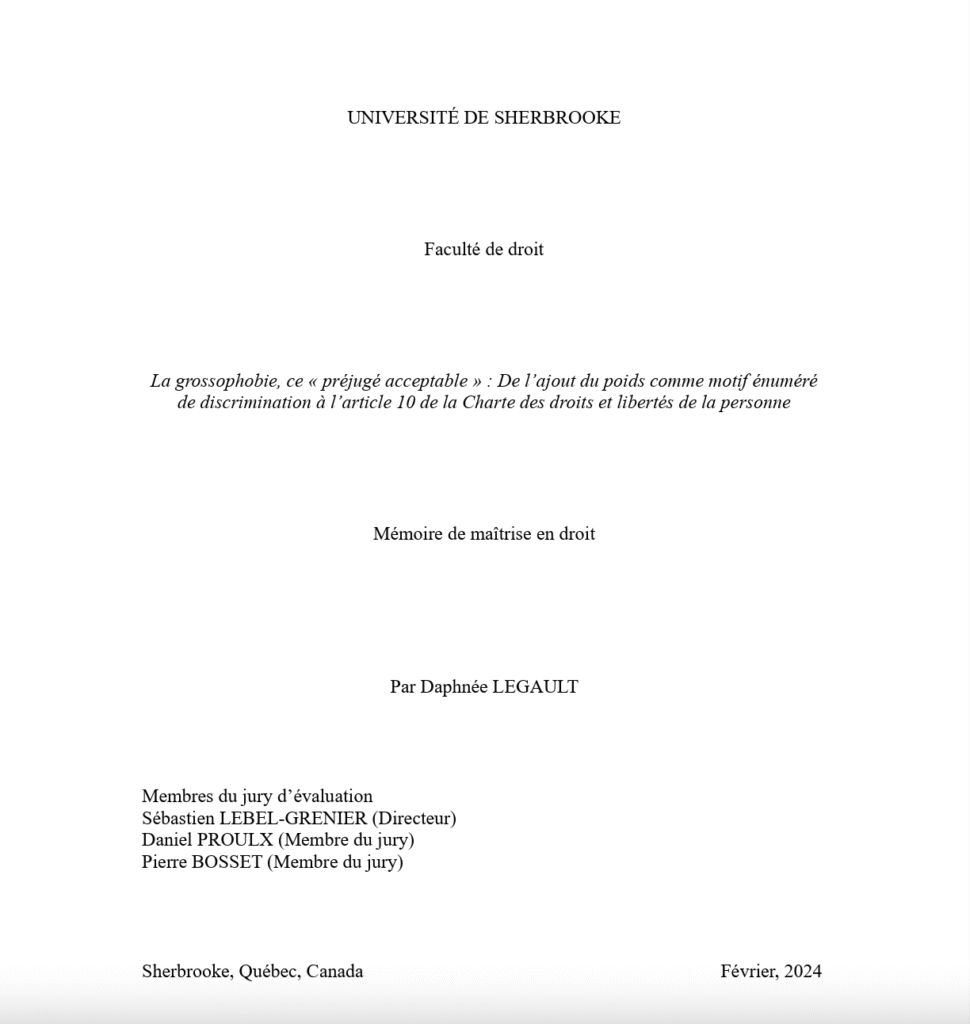
Every month, essential reports related to DEI are released and too often end up gathering dust on a shelf. Too long or too technical, yet full of crucial information! Every month, URelles delves into these complex documents to extract the essentials and deliver a digestible, jargon-free version. This month, we summarize one of the only master’s theses on the subject in Quebec!
A legal void
Weight is not a protected ground under the Charter of Human Rights and Freedoms, and there is no provincial or federal law that explicitly protects against weight discrimination.
Bills introduced over the years have often been rejected due to concerns that they would “encourage” obesity, that the concept was too vague, or that legal action would be too costly.
Discrimination that is very real
In Quebec, 25% of people (all weights combined) say they have experienced weight-based discrimination.
This figure rises to 44% among people
with a BMI over 30.
In Canada, weight-based discrimination
is more common than discrimination based
on religion, income, disability, or
sexual orientation.
Medical fatphobia
In Canada, 1 in 15 adults experiences discrimination in the medical field.
Among people who have experienced weight-related stigma, nearly 65% say they have experienced it from a doctor.
In Quebec, people with a BMI over 30 are three times more likely to report experiencing medical fatphobia.
Fatphobia in the workplace
54% of overweight people say they have experienced fatphobia at work.
Women are the primary victims, and they often become so at a weight considered “high” well before that of men.
The “wage penalty” for overweight women ranges from 6% to 15%, and can reach 24% for the most overweight.
Stereotypes persist: less competent, less reliable, less productive… even though there is no scientific data to support these beliefs.
An industry that profits from fatphobia
The diet industry thrives on the fear of being overweight.
- In 2023, it represented $359 million in Canada and $3.4 billion in the United States.
- This shame economy perpetuates the myth that willpower alone is enough to “change your body,” even though science shows that lasting weight loss is rare and complex.

Want to go further?
At URelles, we help organizations better understand, integrate, and support diversity, including body diversity.
Training on body diversity and fatphobia, strategic support, assessment of your practices: we’re here for you! We’ve even created a card game that allows you to talk about body diversity with your teams.
Write to us: info@urelles.com