Skip to content
Skip to main contentSkip to footer
URelles
  • URelles
  • About us
    • About us
    • URelles in the news
  • Our services
    • Our services
    • Diversity and inclusion coaching
    • Diversity and inclusion training for companies
    • Playful learning for greater inclusion
  • Achievements
  • Resources
    • The magazine
    • Events
  • Q&A
    • French
  • Make an appointment
  • French
QuizMake an appointment

The magazine

AgeismBIPOCDEI CommitteesCan we say...?Inclusion2SLGTBQIA+NeurodiversityToolsOpinionsPortraitURelles
Neurodiversity, Portraits
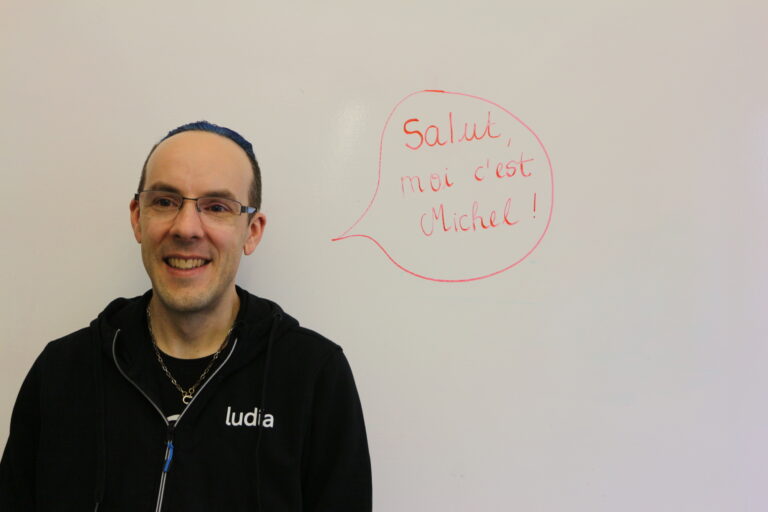
Michel Blanchet
Neurodiversity, Portraits

Ludia, the video game studio that understands the values of autistic people

October 24, 2019
Inclusion
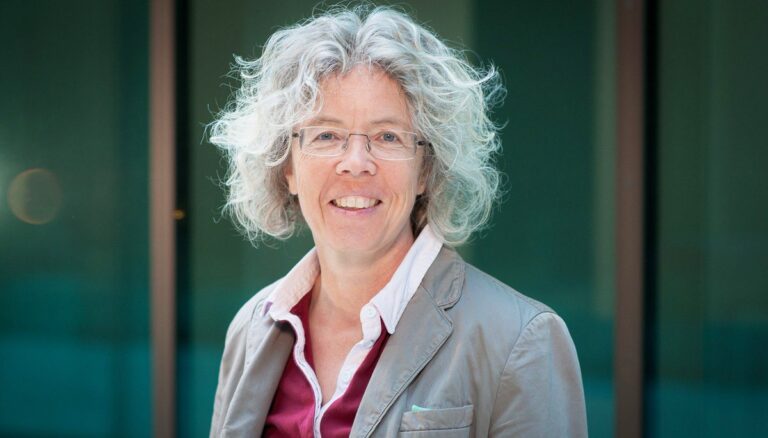
Dre Ursula Eicker
Inclusion

How can we build truly intelligent cities?

October 16, 2019
Inclusion
Inclusion

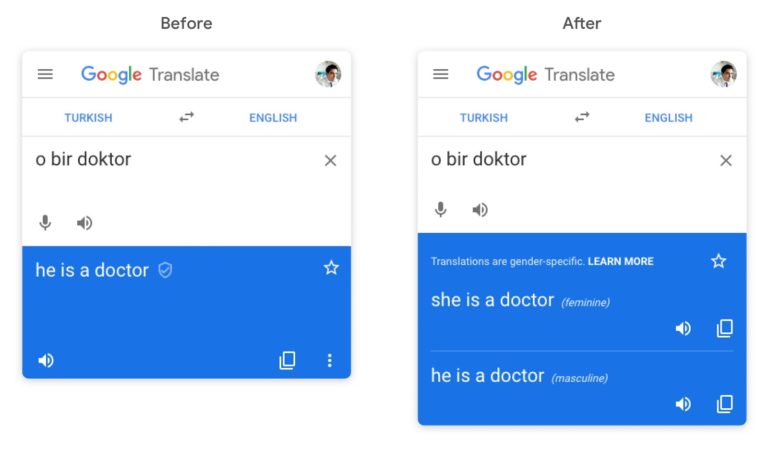
Can artificial intelligence solve unconscious bias in writing?

October 11, 2019
Portraits
Raphaelle Viau
Portraits

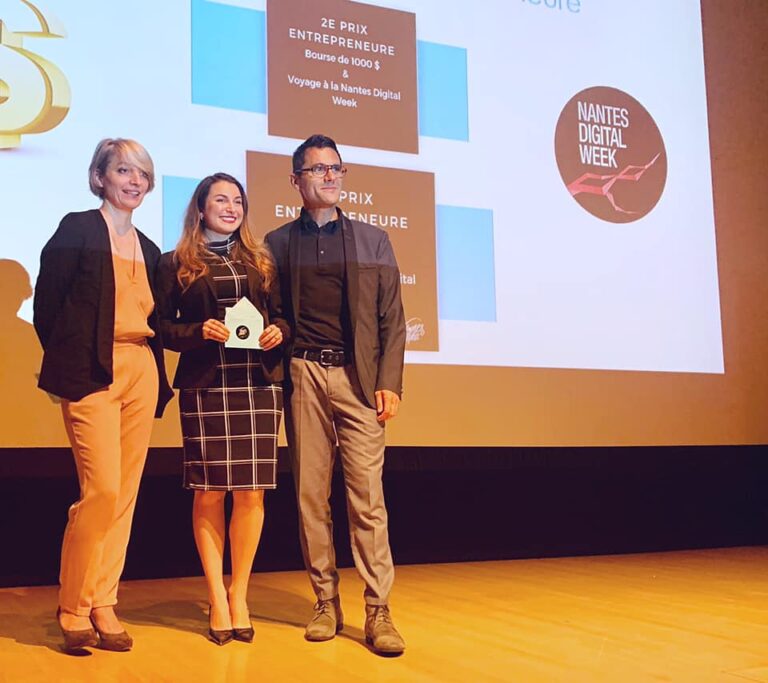
There is a techno-agricultural entrepreneur in Quebec, and we’ve met her!

October 10, 2019
Inclusion, Opinions, URelles

How Slack got 34.3% women in their tech roles

October 10, 2019
Opinions
Wikipedia
Opinions

Is the number one online knowledge source, Wikipedia, sexist?

October 10, 2019
Portraits
Portraits

«Artificial intelligence is not the solution to all the planet’s ills» – Carolina Bessega, CSO of Stradigi AI

October 10, 2019
Portraits
remilia
Portraits

Remilia, the first woman to join a professional League of Legends team

October 9, 2019
Opinions
HOW TWO PSYCHOLOGISTS ARE TO BLAME FOR MALE DOMINATION IN SILICON VALLEY The book Brotopia, published in winter of 2018, showed the whole world a dark and perverse side of Silicon Valley: orgies organized by the area’s most powerful investors and CEOs. And that’s far from the only interesting part of the book. The author also addresses a study conducted by two psychologists whose results are being felt over 60 years later. We explain. The book’s author is Emily Chang, an American journalist and anchor at San Francisco-based Bloomberg TV. She anchors and produces Bloomberg Technology, a daily show centered on technology and the business world. In the middle of the 1960s, System Development Corp., a software company, hired two psychologists. William Cannon and Dallis Perry were supposed to help the business recruit the best workers for programming jobs. The psychologists decided to develop a profile of the perfect programmer. To do so, they studied the personalities of 1,378 programmers. Among them were only 186 women. Next, the psychologies created a “vocational interest scale” to predict an employee’s job satisfaction and, from that, their performance within a company. They concluded that people who like to solve programs, from math to mechanics, make good programmers. So far we agree. But after that it becomes a bit of a stretch, which is our polite way of saying it’s a pile of nonsense! Based on data collected in the study, the psychologists deduced that good programmers share the same trait: they are uninterested in people and prefer objects. The perfect programmer, therefore, is someone antisocial. However, Emily Chang explains that there’s not much evidence supporting the hypothesis that antisocial people are more gifted in mathematics or computing. Because if you draw a conclusion in one direction, you also have to validate it in the other, and the psychologists didn’t do that. The author relates that, au contraire, plenty of research suggests that if you want to hire antisocial people, you’ll find more men than women. And thus the perfect programmer is a man. The work of William Cannon and Dallis Perry was used by large businesses for decades, contributing to the dominance of men in technology. This anecdote from the 1960’s sadly brings to mind the sexist memo that Google engineer James Damore wrote in 2017. It suggests that in terms of mindset, Silicon Valley is going more backward than forward!
Opinions

How two psychologists are to blame for male domination in Silicon Valley

October 9, 2019
  • ←
  • 1
  • …
  • 17
  • 18
  • 19
  • 20
  • 21
  • …
  • 26
  • →
URelles
At URelles, we recognize that we gather in Tiohtià:ke (Montreal) on the unceded traditional territory of the Kanien'keha:ka (Mohawk) Nation, once a place of exchange and gathering for many First Nations. Link to our recognition statement.
Newsletter subscriptionPrivacy policyCookie policyTerms and conditions of sale
This website has been designed according to low-carbon principles.
Average GHG emissions per page 0.22 g CO2 eq.
Hosted in Québec
Web design : L’agence Nicely
Gérer le consentement
Pour offrir les meilleures expériences, nous utilisons des technologies telles que les cookies pour stocker et/ou accéder aux informations des appareils. Le fait de consentir à ces technologies nous permettra de traiter des données telles que le comportement de navigation ou les ID uniques sur ce site. Le fait de ne pas consentir ou de retirer son consentement peut avoir un effet négatif sur certaines caractéristiques et fonctions.
Fonctionnel Always active
L’accès ou le stockage technique est strictement nécessaire dans la finalité d’intérêt légitime de permettre l’utilisation d’un service spécifique explicitement demandé par l’abonné ou l’utilisateur, ou dans le seul but d’effectuer la transmission d’une communication sur un réseau de communications électroniques.
Préférences
L’accès ou le stockage technique est nécessaire dans la finalité d’intérêt légitime de stocker des préférences qui ne sont pas demandées par l’abonné ou l’internaute.
Statistiques
Le stockage ou l’accès technique qui est utilisé exclusivement à des fins statistiques. Le stockage ou l’accès technique qui est utilisé exclusivement dans des finalités statistiques anonymes. En l’absence d’une assignation à comparaître, d’une conformité volontaire de la part de votre fournisseur d’accès à internet ou d’enregistrements supplémentaires provenant d’une tierce partie, les informations stockées ou extraites à cette seule fin ne peuvent généralement pas être utilisées pour vous identifier.
Marketing
L’accès ou le stockage technique est nécessaire pour créer des profils d’internautes afin d’envoyer des publicités, ou pour suivre l’utilisateur sur un site web ou sur plusieurs sites web ayant des finalités marketing similaires.
  • Manage options
  • Manage services
  • Manage {vendor_count} vendors
  • Read more about these purposes
Voir les préférences
  • {title}
  • {title}
  • {title}