We read it for you: disability and the barriers that will still exist in 2025
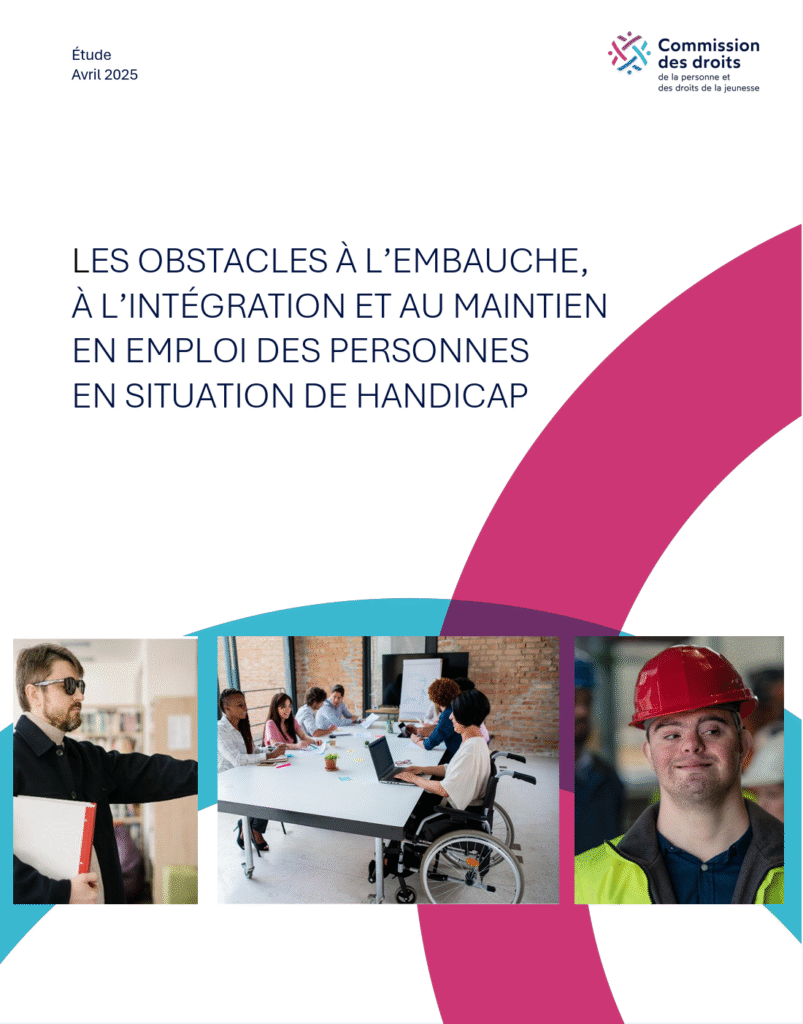
Every month, essential reports related to EDI are released and too often end up gathering dust on a shelf. Too long or too technical, yet full of crucial information! Every month, URelles delves into these complex documents to extract the essentials and deliver a digestible, jargon-free version to you. This month, we summarize the latest, extremely relevant report from the CDPDJ on disability and employment.
Targets never achieved
In Quebec, 21% of people of working age live with a disability.
For Quebec workplaces to be representative, at least 10.5% of employees should have a disability. In the last 40 years, this target has never been met.
A government target of 2% was set in 1984 and has never been achieved;
Public bodies have remained stagnant at 1% since 2005;
Only 10% of private companies and 7% of community organizations hire
people with disabilities.
Statistical profile
The disability rate observed in the population increases with age.
Women are more likely to have a disability than men.
Quebec currently has more than one million people with disabilities who hold at least one certificate or diploma from an educational institution, and this number is growing.
Types of disability
More than one-third of persons with disabilities have a severe or very severe disability.
Disabilities related to pain, flexibility, and mobility are the most frequently mentioned.
Mental health-related disabilities now account for nearly one-third of all people who have reported a disability in Quebec and affect women and younger people more.
The main obstacles
93% of the career paths of people with disabilities are marked by precariousness. When hiring, employers put more energy into identifying the possible “consequences” of disability on productivity rather than on skills.
Many still choose to hide their disability, when possible, or to minimize their
accommodation
needs.
Intrusive medical examinations and questionnaires that have no rational connection to the job are common, particularly in the public sector. More than a third of respondents have experienced this.
Human resources training still emphasizes “ultra-performance,” which reinforces ableist prejudices. The lack of flexibility in schedules and working conditions also creates significant barriers (e.g., limited availability of adapted transportation, medical follow-ups, the need for a lighter schedule to avoid cognitive overload or fatigue, etc.).
Promotion prospects are virtually non-existent. People with disabilities are almost never offered a career plan by their employer.
Complaints to the CDPDJ
Disability is the most common reason for discrimination, accounting for 30% of complaints.
- Between 2017 and 2024, 698 cases were opened in the labor sector, mainly in services, commerce, and industry.
- The majority (60%) concerned dismissals. Employers’ hiring practices were the source of nearly a quarter of the complaints filed (collection of medical information unrelated to employment and refusal to accommodate).
- Women account for 54% of identified victims, and people with mental health disorders are particularly targeted.
- It is mainly SMEs that have been targeted by complaints of disability discrimination in the workplace (94%).

Want to go further?
At URelles, we help organizations better understand, integrate, and support gender identity diversity.
Training, strategic support, assessment of your practices: we’re here to help! We’ve even created a card game that allows you to talk about disability with your teams.
Write to us: info@urelles.com